

de Havilland DH.71 Tiger Moth
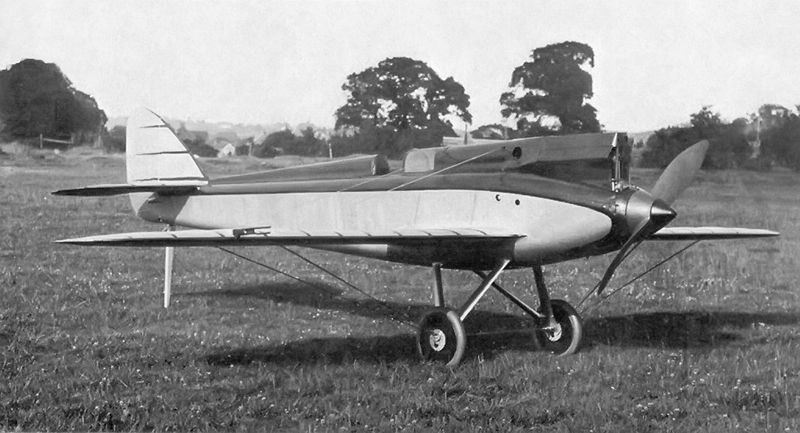
[tabs] [tab title=”Brief”] de Havilland DH.71 Tiger Moth The de Havilland DH.71 Tiger Moth was a single-seat monoplane, designed to research high-speed flight and test replacement engines for the Cirrus engine. About ‘de Havilland DH.71 Tiger Moth’ – Source Wikipedia Role: High-speed research and racing monoplane Manufacturer: De Havilland Aircraft Company First flight: June 24, 1927 Introduction: 1927 Number built: 2 Specifications (de Havilland DH.71 Tiger Moth) General characteristics Crew: One Length: 18 ft 7 in (5.66 m) Wingspan: 22/19 ft 6 in (6.86/5.79 m) Height: 7 ft 0 in (2.13 m) Wing area: 76.5 ft2 (7.11 m2) Empty weight: 618 lb (280 kg) Gross weight: : 905 lb (411 kg) Powerplant: 1 × ADC Cirrus II inline piston/de Havilland Gipsy prototype., 85/135 hp (63 kW) each [/tab] [tab title=”Detailed information”] de Havilland DH.71 Tiger Moth The de Havilland DH.71 Tiger Moth was a single-seat monoplane, designed to research high-speed flight and test replacement engines for the Cirrus engine. Development The de Havilland DH.71 Tiger Moth was a single-seat monoplane, designed to research high-speed flight and test replacement engines for the Cirrus engine. The plane was designed around its test pilot, Hubert Broad, to make it as streamlined as possible: this resulted in the fuselage sides being sloped outwards in order to accommodate his shoulders. The first aircraft built (G-EBQU) was initially fitted with an 85 hp Cirrus engine to check its handling characteristics. This was then replaced with Major Halford’s prototype engine, by then named the Gipsy. The second example, G-EBRV, was fitted with a Cirrus engine. Both aircraft were entered for the 1927 King’s Cup race but ‘QU was withdrawn in order to be tuned for record-breaking purposes. Broad flew ‘RV in the race but retired. In August 1927, Broad flew a 62-mile (100 km) closed-circuit record for Class III Light Aircraft of 186.47 mph (300.09 km/h). Five days later he flew to 19,191 ft (5,849 m) without oxygen in an attempt to break the altitude record for its category. For these record attempts the aircraft was fitted with a new set of mainplanes with a reduced span of 5.79 metres. In 1930, the first DH.71 crashed when the engine cut out while practising for a race in Australia, killing pilot David Smith. The second airframe was for a time displayed outside de Havilland’s Hatfield factory, eventually being destroyed there in a Luftwaffe air raid in October 1940. [/tab] [tab title=”Gallery”] de Havilland DH.71 Tiger Moth The de Havilland DH.71 Tiger Moth was a single-seat monoplane, designed to research high-speed flight and test replacement engines for the Cirrus engine. [nggallery id=14][/tab] [tab title=”Pilots”] de Havilland DH.71 Tiger Moth The de Havilland DH.71 Tiger Moth was a single-seat monoplane, designed to research high-speed flight and test replacement engines for the Cirrus engine. [recent_posts count=”100″ cat=”39″][/tab] [/tabs]
Havilland 115 CP
Haviland 115 CP
Fleet Model 1
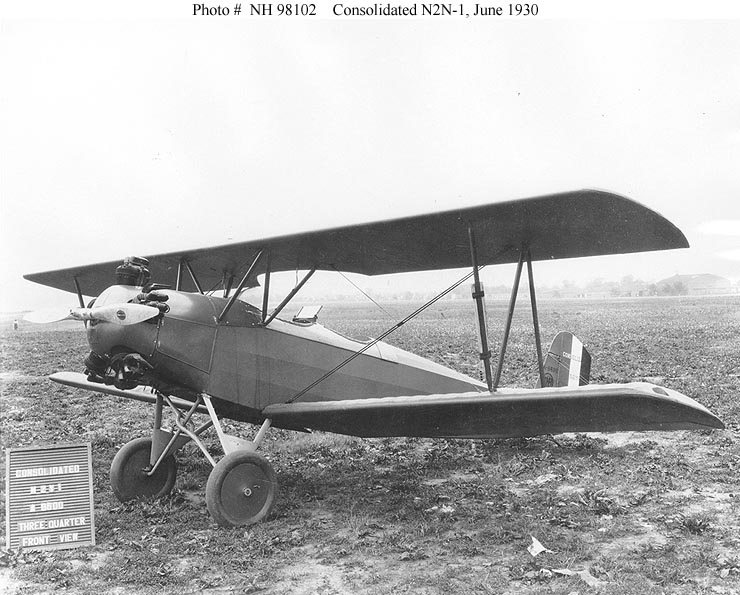
[tabs] [tab title=”Brief”] Fleet Model 1 The Fleet Model 1 (originally the Consolidated Model 14 Husky Junior) and its derivatives were a family of two-seat trainer and sports plane produced in the United States and Canada in the 1920s and 30s. About Fleet Model 1 – Source Wikipedia Role: Recreational and training aircraft Manufacturer: Consolidated, Fleet First flight: 9 November 1928 Designer: Reuben Fleet Specifications (Fleet Model 2) General characteristics Crew: One pilot Capacity: One passenger Length: 21 ft 8 in (6.61 m) Wingspan: 28 ft 0 in (8.54 m) Height: 7 ft 9 in (2.36 m) Wing area: 194 ft2 (18.0 m2) Powerplant: 1 × Kinner K-5, 100 hp (75 kW) Performance Maximum speed: 105 mph (169 km/h) Range: 350 miles (560 km) Service ceiling: 12,200 ft (3,700 m) [/tab] [tab title=”Detailed information”] Fleet Model 1 The Fleet Model 1 (originally the Consolidated Model 14 Husky Junior) and its derivatives were a family of two-seat trainer and sports plane produced in the United States and Canada in the 1920s and 30s. Development The Fleet Model 1 (originally the Consolidated Model 14 Husky Junior) and its derivatives were a family of two-seat trainer and sports plane produced in the United States and Canada in the 1920s and 30s. They all shared the same basic design and varied mainly in their powerplants. They were all orthodox biplanes with staggered, single-bay wings of equal span and fixed tailskid undercarriage. Accommodation was provided for two in tandem, originally sharing a single open cockpit, but in most examples in separate open cockpits. The fuselage was made of welded steel tube with triangular-layout Warren truss construction pattern side structures typical of the time, and the wings had a wooden spar with duralumin ribs, the entire aircraft being fabric-covered. Despite a superficial resemblance to Consolidated’s highly successful Trusty and Husky designs (hence the „Husky Junior” nickname), the Model 14 was an all-new design. Originally created as a means for Consolidated to enter the civil market, the company abandoned this ambition shortly before the completion of the first prototype. The manufacturing rights were purchased by designer and Consolidated company president Reuben Fleet to put into production himself under a new enterprise, Fleet Aircraft. It was an immediate success, and in the first year of production alone, over 300 machines were sold. Consolidated quickly responded by buying Fleet Aircraft and retaining it as a subsidiary while opening a second production line at Fort Erie, Ontario, Canada. Canadian manufacturing was a great success, with some 600 examples built for the Royal Canadian Air Force as the Fleet Fawn (Model 7) and Fleet Finch (Model 16). A small number of US-built machines were purchased by the US military, including a batch evaluated by the United States Army Air Corps as the PT-16 but not bought in quantity, and six specialised N2Y trainers for the United States Navy equipped with hooks to catch the trapeze on aircraft-carrying airships and train F9C Sparrowhawk pilots. US manufacturing rights were eventually sold to Brewster, which intended to produce the Brewster B-1 based on the Canadian Model 16F. Variants Fleet Model 2 On display in the Cradle of Aviation Museum Fleet Model 7 Consolidated Model 14 Husky Junior: prototypes (ca. 5 built) Fleet Model 1: initial production version with Warner Scarab engine (ca. 90 built) Fleet Model 2: initial production version with Kinner K-5 engine (203 built) – PT-6 – USAAC designation for Model 2 (16 built) – N2Y-1 – USN version with trapeze hook for airship docking training (5 built) Fleet Model 3: version with Wright J-6 engine (1 converted from Model 2) Fleet Model 4: version with Curtiss Challenger engine (1 built) Fleet Model 5: version with Brownback C-400 engine (1 built) Fleet Model 6: improved version for USN as XN2Y-2, later further modified as an autogiro by Pennsylvania Aircraft with the upper wing replaced by a rotor, it was redesignated XOZ-1 (1 built) Fleet Model 7: version with Kinner B-5 engine (48 built, plus several converted from Model 2 by Fleet in Canada) – Fleet Model 7A – Fleet Model 7B – Canadian production version – Fleet Model 7C – Canadian production version with Armstrong Siddeley Civet engine – Fleet Model 7G – Canadian production version with de Havilland Gipsy III engine – XPT-6 – One Model 7 acquired by the US Army Air Corps for service tests. Version with 100-hp Kinner R-370-1 (Kinner K5) engine – YPT-6 – ten aircraft similar to the XPT-6, used by the US Army Air Corps for service tests and evaluation – YPT-6A – modified version of the Model 7 fitted with an enlarged cockpit. Used by the US Army Air Corps for service tests and evaluation Fleet Model 8: three-seat version similar to Model 7 (7 built) Fleet Model 9: refined version of Model 8 (12 built) Fleet Model 10: refined version of Model 7 for export to Europe – Fleet Model 10A – version with 100 hp Kinner engine – Fleet Model 10B – version with 125 hp Kinner engine – Fleet Model 10D – version with 160 hp Kinner engine – Fleet Model 10-32D – generally similar to the Model 10D, but with an increased 4-ft 0-in (1.22-m) wingspan – Fleet Model 10E – version with 125 hp Warner engine – Fleet Model 10F – version with 145 hp Warnerengine – Fleet Model 10G – version with de Havilland Gypsy Major engine for governments of Portugal and Romania (ca. 70 built) – Fleet Model 10H – version with Menasco C-4S engine Fleet Model 11: version with Kinner R-5 engine; some exported to China and Mexico Fleet Model 14: Model 2 modified for participation in Guggenheim Safe Aircraft Competition but disqualified. ca. 300 licence-built in Romania. Fleet Model 16: Fleet Finch – strengthened Canadian production version with sliding canopy, powered by a 130 hp de Havilland Gipsy Major engine (ca. 600 built) – Fleet Model 16B – Fleet Finch Mk II – Strengthened Canadian production version, powered by a Kinner B5 engine – Fleet Model 16D – similar to the Model 16B, but fitted
Fleet Kinner
Fleet Model 1 (original Consolidated Model 14 Husky Junior) și derivații săi erau o familie de două locuri, trainer cu planul sport, produse în Statele Unite și Canada între anii 1920 și 1930. Despre Fleet Kinner- Wikipedia Rol: Recreațional și antrenamente Fabricant: Consolidated, Fleet Designer: Reuben Fleet Primul zbor: 9 November 1928 Dezvoltare Fleet Model 1 (original Consolidated Model 14 Husky Junior) și derivații săi erau o familie de două locuri, trainer cu planul sport, produse în Statele Unite și Canada între anii 1920 și 1930. Au împărtășit toți același design de bază și a variat în principal în motorizareai lor. Au fost toate biplane ortodoxe eșalonate, cu un singur bay aripi egale și de control ale tailskid fix trenului de rulare. Spațiul era asigurat pentru doi în tandem, schimbul inițial un cockpit deschis singur, dar în cele mai multe exemple în cockpituri separate, deschise.Fuselajul a fost facut dintr-un tub de oțel sudat, cu aspect triunghiular-schelete, structuri Warren pentru construcții adverse tipice modelului de atunci. Aripile au avut o parte din lemn cu nervuri duraluminiu, restul aeronavei, fiind acoperit cu material textil. În ciuda asemănării superficiale cu Trusty, de mare succes consolidat și Huskydesigns (prin urmare, „Husky Junior” porecla), Modelul 14 a fost un design cu totul nou. Inițial creat ca un mijloc de consolidare pentru a intra pe piața civilă, compania a abandonat această ambiție cu puțin timp înainte de finalizarea primul prototip. Drepturile de fabricație au fost achiziționate de către designer și societate consolidată. Președintele flotei Ruben, pune în producție el însuși sub o întreprindere nouă, flota de aeronave. Acesta a fost un succes imediat, iar în primul an de producție în monoterapie, peste 300 de mașini au fost vândute. Consolidat a răspuns rapid prin cumpararea aeronavei Fleet și menținerea ca o filială în timp ce deschiderea unei linii de productie al doilea la Fort Erie, Ontario, Canada. De fabricație canadiană a fost un mare succes, cu aproximativ 600 de exemple construite pentru Royal Air Force din Canada ca Fawn flotei (model 7) și Finch Fleet (model 16). Un număr mic de mașini construite SUA au fost achiziționate de către armata SUA, inclusiv un lot evaluat de către Armata Statelor Unite Air Corps ca PT-16, dar care nu au cumpărat în cantitate, iar șase formatori de specialitate N2Y pentru Marinele Statelor Unite echipate cu carlige pentru prinderea trapez pe aeronave care poartă piloți de tren F9C Sparrowhawk. Drepturile de producție SUA au fost în cele din urmă vândute la Brewster, care intenționează să producă Brewster B-1, pe baza 16F canadiene imaginile. Variante Fleet Model 2 afișat la Cradle of Aviation Museum. Fleet Model 7 Consolidated Model 14 Husky Junior– prototipuri (cca. 5 consttruite) Fleet Model 1– producția inițială versiune cu motor Warner Scarab (cca. 90 construite) Fleet Model 2– producția inițială versiune cu motor Kinner K-5 (203 construite) PT-6– USAAC design pentru Model 2 (16 construite) Fleet Model 3 – versiune cu motor Wright J-6 (1 converted from Model 2) Fleet Model 4 – versiune cu motor Curtiss Challenger (1 construit) Fleet Model 5– versiune cu motor Brownback C-400 (1 construit) Fleet Model 7A Fleet Model 7B– Versiunea producției canadiene Fleet Model 7C– Versiunea producției canadiene cu motor Armstrong Siddeley Civet Fleet Model 7G– Versiunea producției canadiene cu motor de Havilland Gipsy III XPT-6– Un Model 7 achiziționat de US Army Air Corps pentru serviciile de testare Versiune cu motor 100-cp Kinner R-370-1 (Kinner K5) YPT-6– 10 aeronave similare XPT-6, folosite de US Army Air Corps pentru servicii de evaluare și testare Fleet Model 8– versiune de 3 locuri similară cu Model 7 (7 construite) Fleet Model 9– versiune rafinată Model 8 (12 construite) Fleet Model 10– versiune rafinată Model 7 pentru exportul în EuropaFleet Model 10A– versiune cu motor Kinner 100cp Fleet Model 10B– versiune cu motor Kinner 125cp Fleet Model 10D– versiune cu motor Kinner 160cp Fleet Model 10-32D– similar în general cu Model 10D, dar cu creșterea anvergurii de 4-ft 0-in (1.22-m) Fleet Model 10E– versiune cu motor Kinner 125cp Fleet Model 10F– versiune cu motor Warnerengine 145cp Fleet Model 10G– versiune cu motor de Havilland Gypsy Major pentru guvernul Portugaliei și al României (cca. 70 construite) Fleet Model 10H– versiune cu motor Menasco C-4S Fleet Model 11– versiune cu motor Kinner R-5; câteva au fost exportate în China și Mexic Fleet Model 14– Model 2 modificat pentru participarea la Guggenheim Safe Aircraft Competition dar descalificat. cca. 300 licențiate construite în România. Fleet Model 16B – Fleet Finch Mk II– versiunea producției Strengthened Canadian cu motor Kinner B5 Fleet Model 16D– similar cu Model 16B, dar cu motor Kinner B5 Fleet Model 16F– prototip pentru Brewster B-1 Fleet Model 16R– Fleet Finch Mk I– designul lui Fleet 16D construit în Canada pentru RCAF Fleet Model 21 – versiunea armată construită ăn Canada pentru Mexican Air Force (11 construite) Fleet Model 21K – reproiectatp din Model 21M, după ce ulterior a fost vândută unui cumpărător privat. N2Y-1– USN versiune cu trapez apeze cârlig pentru formarea andocarului dirijabil (5 construite) Fleet Model 6– versiunea îmbunătățită pentru USN ca XN2Y-2, mai târziu modificată ca un autogiro de Pennsylvania Aircraft cu aripa superioară înlocuită cu un rotor, acesta a fost redesemnat XOZ-1 (1 construit) Fleet Model 7– Versiune cu motor Kinner B-5 (48 construite, plus câteva convertite în Model 2 de Fleet în Canada) YPT-6A– versiune modificata a Model 7 echipate cu un cockpit mărit. Utilizată de către US Army Air Corps pentru teste de servicii și de evaluare Fleet Model 16– Fleet Finch– versiune consolidată de producție canadiană cu alunecare în cockpit, cu motor de Havilland Gipsy Major 130 hp (cca. 600 construite) Fleet Model 21M– Denumire pentru o aeronavă demonstrație unică Fleet Model 1 (original Consolidated Model 14 Husky Junior) și derivații săi erau o familie de două locuri, trainer cu planul sport, produse în Statele Unite și Canada între anii 1920 și 1930. Specificatii (Model 2) Caracteristici generale: Echipaj: un pilot Capacitate: 1 pasager Lungime: 21 ft 8 in (6.61 m) Anvergură: 28 ft
Fleet
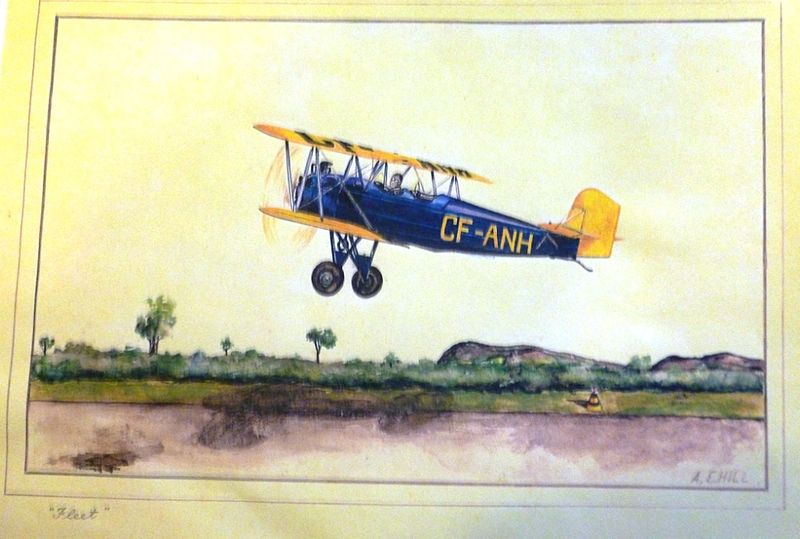
Despre Fleet –Wikipedia A fost un avion canadian fabricat din 1928 până în 1957. Istorie În 1928, Consiliul de aeronave consolidate a decis să renunţe la lumina lor, antrenorul aeronavelor şi-a vândut drepturile la Brewster Aircraft. Reuben H. Fleet a fondat flota de aeronave în Fort Erie, Ontario, pentru a dobândi drepturi străine pentru aceste aeronave. Consolidate, cumpară Fleet Aircraft ca divizie separată în 1929 şi au format flota de aeronave din Canada în 1930. Numele flotăi a fost abandonat pentru denumirea Consolidated, în 1939. Flota de aeronave din Canada a produs Fleet Finch pentru RCAF, şi mai târziu Fleet Canuck. Flota a dezvoltat un prototip elicopter luminat, care a zburat cu succes, dar nu a fost pus în producţie. Flota a încheiat operaţiunile de fabricaţie ale aeronavelor în 1957. Compania a fost redenumită Fleet Aerospac şi a operat ca o divizie Magellan Aerospace. Divizia Fleet Aerospace a fost închisă în 2003, şi mai târziu s-a redeschis ca Fleet Canada. Noua companie nu a fost afiliată cu Magellan Aerospace, şi l-a operat independent. Avioane Fleet Models 1,2 & 5 Cockpit deschis, două locuri, pentru primele antrenamente. Fleet Model 7 Fawn Cockpit deschis, două locuri, pentru primele antrenamente. Fleet Models 10-16 Finch Cockpit deschis, două locuri, pentru primele antrenamente. Fleet Model 21 Export de bază pentru avioane de luptă Fleet model 50 Freighter Biplan marfă pentru operațiuni Bush. Fleet model 60 Fort Pentru antrenament intermediar utilizat ca antrenament radio Fleet models 80, 81 Canuck Lumină de utilitate aeronave (Similar to Cub) Fleet helicopter Fairchild M-62/PT-23/PT-26 Cornell (licenta) Specificatii (Model 2) Caracteristici Generale Echipaj: Un pilot Capacitate:1 pasager Lungime:21 ft 8 in (6.61 m) Anvergura: 28 ft 0 in (8.54 m) Inaltime: 7 ft 9 in (2.36 m) Zona aripa: 194 ft2 (18.0 m2) Motopropulsor:1 × Kinner K-5, 100 hp (75 kW) Performanta Viteza maxima: 105 mph (169 km/h) Gama: 350 miles (560 km) Plafon servicii:12,200 ft (3,700 m)
Fiesler Fi 156 (Storch)
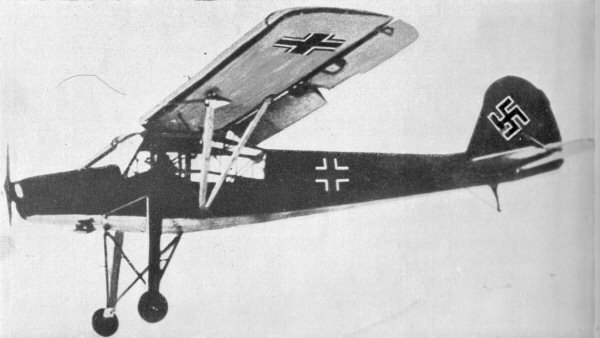
[tabs] [tab title=”Brief”] Fiesler Fi 156 (Stork) The Fieseler Fi 156 Storch (English: Stork) was a small German liaison aircraft built by Fieseler before and during World War II. About Fiesler Fi 156 (Stork) – Source Wikipedia Role: Reconnaissance and communications Manufacturer: Fieseler, Morane-Saulnier Designers: Gerhard Fieseler, Reinhold Mewes, Erich Bachem First flight: 24 May 1936 Introduction: 1937 Status: Retired 1945 (Germany), 1970 (France) Primary users: Luftwaffe, Aviation Légère de l’Armée de Terre, Armée de l’Air Number built: Over 2,900 Specifications (Fi 156) General characteristics Crew: Two Length: 9.9 m (32 ft 6 in) Wingspan: 14.3 m (46 ft 9 in) Height: 3.1 m (10 ft 0 in) Wing area: 26 m² (280 ft²) Empty weight: 860 kg (1,900 lb) Loaded weight: 1,260 kg (2,780 lb) Powerplant: 1 × Argus As 10 air-cooled inverted V8 engine, 180 kW (240 hp) Performance Maximum speed: 175 km/h (109 mph) at 300 m (1,000 ft) Range: 380 km (210 nmi, 240 mi) Service ceiling: 4,600 m (15,090 ft) Rate of climb: 4.8 m/s (945 ft/min) Wing loading: 48.5 kg/m² (9.9 lb/ft²) Power/mass: 143 W/kg (0.087 hp/lb) Armament Guns:MG 15 machine gun [/tab] [tab title=”Detailed information”] Fiesler Fi 156 (Stork) The Fieseler Fi 156 Storch (English: Stork) was a small German liaison aircraft built by Fieseler before and during World War II. The Fieseler Fi 156 Storch (English: Stork) was a small German liaison aircraft built by Fieseler before and during World War II. Production continued in other countries into the 1950s for the private market. It remains famous to this day for its excellent STOL performance; French-built later variants often appear at air shows. Conception and production Design and development In 1935, the RLM (Reichsluftfahrtministerium, Reich Aviation Ministry) invited tenders from several companies for a new Luftwaffe aircraft suitable for liaison, army co-operation (today called Forward Air Control), and medical evacuation. This resulted in the Messerschmitt Bf 163 and Siebel Si 201 competing against the Fieseler firm’s tender. Conceived by chief designer Reinhold Mewes and technical director Erich Bachem, Fieseler’s design had a far better STOL (Short Take Off and Landing) performance. A fixed slat ran along the entire length of the leading edge of the long wings, while a hinged and slotted flap ran along the entire length of trailing edge. This was inspired by earlier 1930s Junkers „double-wing” aircraft wing control surface designs, including the ailerons. A design feature rare for land-based aircraft, enabled the wings on the Storch to be folded back along the fuselage in a manner similar to the wings of the US Navy’s F4F Wildcat fighter. This allowed the aircraft to be carried on a trailer or even towed slowly behind a vehicle. The primary hinge for the folding wing was located in the wing root, where the rear wing spar met the cabin. The long legs of the main landing gear contained oil-and-spring shock absorbers that had a travel of 450 mm (18 inches), allowing the plane to land on comparatively rough and uneven surfaces. In flight the landing gear legs hung down, giving the aircraft the appearance of a long-legged, big-winged bird, hence its nickname, Storch. With its very low landing speed the Storch often appeared to land vertically, or even backwards, in strong winds from directly ahead. German production About 2,900 Fi 156s, mostly Cs, were produced from 1937 to 1945 at the Fieseler Factory in Kassel. In 1942 production started in the Morane-Saulnier factory at Puteaux in France. Due to the demand for the Bf 109 and the Fw 190, Storch production was shifted to the Leichtbau Budweis in Budweis in 1943. Czech production In 1944 production was moved from the Leichtbau Budweis to the Mráz factory in Chocen which produced 138 examples of Fi 156, locally designated as K-65 Čáp. Production ended in 1949. French production Immediately after the liberation of France in 1944, the production of Storch at the Morane-Saulnier factory was continued at the request of the Armée de l’Air and designated MS 500 for the batch of aircraft produced with the remaining stock of Argus engines. Further modification and use of different engines (inline and radial) are known under different type. The use of the plane in Indochina highlighted the weakness of the wood in the construction of the airframe; it was then decided to build the wings in metal. Among the modifications, the defensive weapon aiming through the back window was dropped, although some aircraft have then been modified on the field to take a machine gun MAC 34T firing through one of the side windows. 141 aircraft were built before the end of World War II and a total of 925 aircraft were built before the end of the production of all type of Criquet by Morane-Saulnier in 1965. Romanian production Licence production was also started in Romania in 1943 at the ICAR factory in Bucharest. Only 10 were built by the time Romania switched sides, with a further 70 aircraft being built by the Romanians before production ended in 1946.[2] Modern development Because of its superb STOL characteristics, there have been many attempts to recreate or copy the Storch, namely in the form of various homebuilt aircraft such as the Pazmany Stork and Roger Mann’s Ragwing Stork. Another is the Slepcev Storch designed by Nestor Slepcev. It is a ¾ scale reproduction of the original with some simplifications. The use of modern materials provides better STOL performance than the original with a take-off run of 30 m and landing-roll of 50 m with no headwind.[3] Operational history During WWII The Storch was deployed in all European and North African theaters of World War II. But it is probably most famous for its role in Operation Eiche, the rescue of deposed Italian dictator Benito Mussolini from a boulder-strewn mountain-top near the Gran Sasso. Even though the mountain was surrounded by Italian troops, German commando Otto Skorzeny and 90 paratroopers parachuted onto the peak and quickly captured it. But the problem remained of how to get back off. A Focke-Achgelis Fa 223 helicopter was sent, but it broke down en route.
Fiesler Fi 156
Fieseler Fi 156 Storch (in engleza: Stork) a fost un avion german de dimensiuni reduse, construit de înaintea și în cursul celui de-al doilea Război Mondial. Rol: Recunoaștere & comunicareFabricant: Fieseler, Morane-Saulnier Proiectant: Gerhard Fieseler, Reinhold Mewes, Erich Bachem Primul zbor: 24 Mai 1936 Introducere: 1937 Retras: 1945 (Germania), 1970 (Franta) Primii utilizatori: LuftwaffeAviation Légère de l’Armée de Terre, Armée de l’Air Produs: 1937-1949 (1965 for the MS 500) Număr de aeronave construite: peste 2,900 Producția sa a continuat în alte țări, în anul 1950 pentru vânzări private. A rămas faimos în zilele noastre pentru performanța excelentului său STOL; apar mai târziu variante franceze, văzute des în showurile aeriene. Concepție și producție Proiectare și dezvoltare În 1935, RLM (Reichsluftfahrtministerium, Reich Aviation Ministry) au invitat ofertanți din mai multe companii pentru un nou avion Luftwaffe, de legătură, a armatei de cooperare (astăzi numită Forward Air Control), și evacuare medicală.Acest lucru a rezultat Messerschmitt Bf 163 și Siebel Si 201 ce concurau cu firma Fieseler. Conceput de designerul sef Reinhold Mewes și director tehnic Erich Bachem, designul Fieseler a avut o performanță mult mai bună STOL (Short Take Off and Landing). O șipcă fixată pe întreaga lungime a marginii interioare a aripii lungi, și un lambou cu balamale și fante pe toată lungimea muchiei de scurgere. Acest lucru a fost inspirat de Junkers la începutul anului 1930, aeronavă cu control și model de suprafață “aripă dublă”, inclusiv eleroane. O caracteristică rară de proiectare pentru aeronava terestră, a permis îndoirea aripilor pe Stroch, de-a lungul fuzelajului, într-un mod similar cu aripile aeronavei US Navy’s F4F Wildcat pentru vânătoare. Avest lucru a permis aeronavei să fie cărate cu o remorcă sau chiar remorcată încet în spatele unui vehicul. Prima balama pentru plierea aripii a fost localizată în rădăcina aripii, unde aripa din spate înâlnește cabina. Picioarele lungi ale trenului de aterizare principal, coținea ulei de amortizare, având un lucru de 450mm (18 inchi), ce permit avionului aterizarea pe suprafețe relativ aspre sau neuniforme. În zbor, la aterizare, picioarele atârnă în jos, oferindu-i aspectul de o pasăre cu picioare lungi, cu aripi mari, prin urmare porecla aeronavei este Storch. Cu viteza foarte scăzută de aterizare, Storch a apărut adesea aterizând pe verticală, sau chiar invers, în vânt puternic din depărtare. Productia germană Circa 2900 Fi 156s, ce mai mare parte Cs, au fost produse din 1937 până în 1945 la fabrica Fieseler din Kassel. În 1942 producția a început fabrica Morane-Saulnier din Puteaux, în Franța. Datorită cererii de Df 109 și Fw 190, producția Storch a fost mutată la Leichtbau Budweis în Budweis în anul 1943. Producția cehă În 1944 producția a fost mutată de la Leichtbau Budweis la fabrica Mráz din Chocen care a produs 138 de exemplare de Fi 156, la nivel local, proiectate ca K-65 Čáp. Producția ia sfârsit în 1949. Producția franceză Imediat după eliberarea Franței în 1944, producția de Storch la fabrica Morane-Saulnier a fost continuată la cererea Armée de l’Air, cu design de MS 500, pentru lotul de avioane produse cu stocul rămas de motoare Argus.Continuă modificările și uzul de motoare diferite (în linie și radiale) sunt cunoscute ca tipuri diferite. Utilizarea avionului în Indochina a evidențiat slabiciunea lemnului în construcția corpului aeronavei, urmând să se decidă construcția aripilor din metal. Printre modificări, arma defensivă cu scop fereastră-spate a scăzut, deși unele avioane au fost modificate pe teren, pentru a-i lua o mitralieră MAC 34T, pusă într-una dintre ferestrele laterale. 141 de aeronave au fost construite înaintea celui de-al doilea Război Mondial și un total de 925 de aeronave au fost construite înainte sfârșitului de producție al tuturor tipurilor de Criquet by Morane-Saulnier în 1965. Producția românească Licența de producție a fost, de asemenea, începută în România în 1943 la fabrica ICAR din București. Doar 10 au fost construite în timp, cu o suplimentare de 70 de avioane construite de români înainte ca producția de aeronave sa se încheie, în 1946. Sumarul producției Producțtie pe fabrică și pe tip până la 31 Martie 1945 1945: Type Fieseler Morane-Saulnier Mraz Leichtbau Total A-0 10 10 B-0 14 14 B-1 36 36 C-1 286 286 C-2 239 239 C-3 1,230 525 1,755 C-5 259 32 63 354 D-1 117 117 D-2 46 10 56 Total 1,908 784 78 73 2,867 Dezvoltare modernă Datorită caracteristicilor sale superbe, STOL, au fost multe încercări de a recrea sau copia Storch-ul, și anume, forma aeronavei ca cea a Pazmany Stork și Roger Mann’s Ragwing Stork. Un alt aspect este Storch Slepcev proiectat de Nestor Slepcev. Aceasta este o reproducere la scară ¾ din original, cu unele simplificări.Utilizarea materialelor moderne oferă o performanță mai bună decât cele originale STOL, cu un rulaj la decolare de 30 m și aterizare-rolă de 50 m fără față pentru vânt. Istorie operațională În timpul WWII În timpul celui de-al Doilea Război Mondial, Storch a fost utilizat în toate teatrele din Europa și Africa de Nord în timpul celui de-al Doilea Război Mondial. Este probabil cel mai faimos pentru rolul său de salvare în Operațiunea Eiche, a detronat dictatorul italian Benito Mussolini, de la muntele de sus de lângă Gran Sasso. Chiar dacă muntele a fost înconjurat de trupele italiene, comandantul german Otto Skorzeny și încă 90 de parașutiști, l-au capturat rapid. Problema era însă recuperarea. Un elicopter Focke-Achgelis Fa 223 a fost trimis, dar s-a stricat pe drum. În schimb, pilotul Walter Gerlach a zburat într-un Storch. A aterizat la 30 m (100 ft), și dupa îmbarcarea lui Mussolini și Skorzeny, acesta a decolat în 80m (250 ft), chiar dacă avionul a fost supra-încărcat. Storch a fost implicat în salavarea lui Mussolini, a purtat coduri radio, sau Stammkennzeichen, de „SJ + LL” pentru acoperirea filmului îndrăzneț de salvare. În 26 April 1945 Storch a fost unul dintre ultimele avioane aterizate pe pista din Tiergarten din apropierea Brandenburg Gate în timpul bătăliei de la Berlin și chinurile
Caudron C.640 Typhon
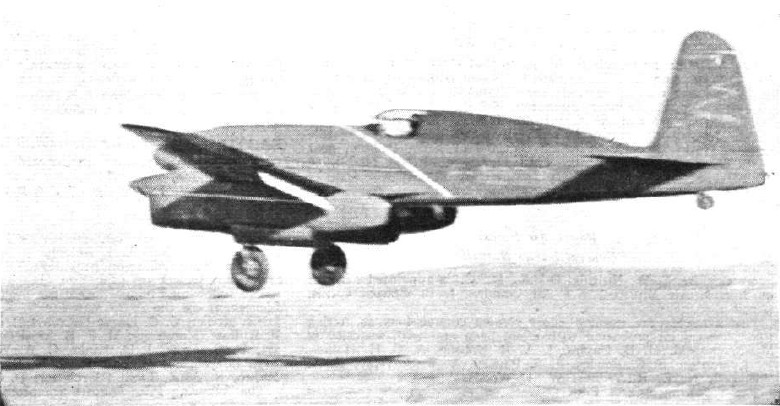
[tabs] [tab title=”Brief”] Caudron C.640 Typhon The Caudron C.640 Typhon was a 1930s French high-speed single-seat monoplane utility aircraft built by Caudron-Renault About Caudron C.640 Typhon – Source Wikipedia Role: High-Speed Mailplane Manufacturer: Caudron-Renault Designers: Georges Otfinovsky, Marcel Riffard First flight: 1935 Introduction: 1935 Number built: 10 Specifications (C.640) General characteristics Crew: Two Length: 35 ft 11 in (10.95 m) Wingspan: 47 ft 6¾ in (11.50 m) Height: 9 ft 10 in (3.00 m) Wing area:301.40 ft² (28.00 m²) Empty weight: 3,594 lb (1630 kg) Max. takeoff weight: 7,496 lb (3400 kg) Powerplant: 2 × Renault 6Q inline piston engine, 220 hp (164 kw) each Performance Maximum speed: 249 mph (400 km/h) Range: 2,315 miles (3725 km) Service ceiling: 22,965 ft (7000 m) [/tab] [tab title=”Detailed information”] Caudron C.640 Typhon The Caudron C.640 Typhon was a 1930s French high-speed single-seat monoplane utility aircraft built by Caudron-Renault History Similar in concept to the de Havilland DH.88 Comet the Typhon (en: Typhoon) was designed by Georges Otfinovsky and Marcel Riffard for use on long-range postal routes. The first aircraft first flew in March 1935. The aircraft was a twin-engined low-wing cantilever monoplane of wooden construction. Seven C.640s were built. The Typhon established 5000km speed records. It was not a success in operation as its flexible wings experienced buffeting and vibration problems. Variants C.640 Typhon: – production model with Renault 6Q engines, 7 built. C.641 Typhon: – record breaking version with raised canopy and increased fuel capacity, 2 built. C.670 Typhon – prototype high-speed bomber version with a crew of three, similar to the C.640 but with increased dimensions and weights, one built. [/tab] [tab title=”Gallery”] Caudron C.640 Typhon The Caudron C.640 Typhon was a 1930s French high-speed single-seat monoplane utility aircraft built by Caudron-Renault [nggallery id=10][/tab] [tab title=”Pilots”] Caudron C.640 Typhon The Caudron C.640 Typhon was a 1930s French high-speed single-seat monoplane utility aircraft built by Caudron-Renault [recent_posts count=”100″ cat=”35″][/tab] [/tabs]
Caudron Typhon (Renault)
Caudron C.640 Typhon a fost un monopost de viteză din 1930, francez, monoplan utilat și construit de Caudron-Renault. Despre Caudron Typhon (Renault) Rol: Avion cu viteză mare pentru transport poștă Fabricant: Caudron-Renault Proiectant: Georges Otfinovsky/Marcel Riffard Primul zbor: 1935 Introducere: 1935 Număr de aeronave construite: 10 Istorie Concept similar cu de Havilland DH.88 Comet Typhon (en: Typhoon) proiectat de Georges Otfinovsky și Marcel Riffard folosit în cursele poștale lungi. Primul avion a zburat în martie 1935. Monoplanul avea două motoare, cu aripi joase, construcție din lemn. Au fost construite C.640. Typhon a stabilit recorduri de viteză de 5000km. Acesta nu a fost un succes, deoarece aripile sale flexibile au suferit lovituri și probleme cu vibrațiile. Variante C.640 Typhon – model produs cu Renault motor 6Q, 7 unități construite. C.641 Typhon – versiunea cu record, cu boltă mobilă, și capacitate crescută de combustibil, 2 unități construite. C.670 Typhon – prototip bombardier de mare viteză, cu un exhipaj pentru trei, similar cu C.640, dar cu dimensiuni și greutăți mai mari, doar 1 construit. Specificatii (C.640) Caracteristici Generale: Locuri: 2 Lungime: 35 ft 11 in (10.95 m) Anvergură: 47 ft 6¾ in (11.50 m) Înalțime: 9 ft 10 in (3.00 m) Suprafață aripă: 301.40 ft² (28.00 m²) Greutate la golt: 3,594 lb (1630 kg) Max. takeoff weight: 7,496 lb (3400 kg) Powerplant: 2 × Renault 6Q inline piston engine, 220 hp (164 kw) each Performanță: Viteză maximă 249 mph (400 km/h) Interval: 2,315 miles (3725 km) Plafon servcii: 22,965 ft (7000 m)
Bücker Bü 180 Student
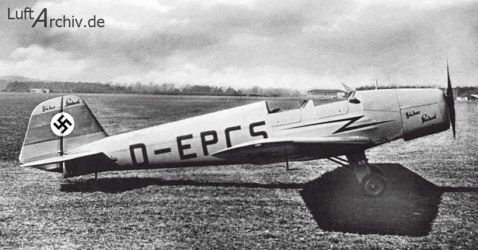
[tabs] [tab title=”Brief”] Bücker Bü 180 Student The Bücker Bü 180 Student was a 1930s German two-seat sporting/training aircraft built by Bücker Flugzeugbau. About Bücker Bü 180 Student – Source Wikipedia Role: Two-seat sport/training monoplane Manufacturer: Bücker Flugzeugbau First flight: 1937 Specifications (Bü 180) Data from Aircraft of the Third Reich[1], The Encyclopedia of World Aircraft General characteristics Crew: Two Length: 7.1 m (23 ft 4 in) Wingspan: 11.5 m (37 ft 9 in) Height: 1.85 m (6 ft 1 in) Wing area: 15 m2 (160 sq ft) Empty weight: 295 kg (650 lb) Gross weight: 540 kg (1,190 lb) Powerplant: 1 × Walter Mikron II inverted 4-cyl. air-cooled in-line piston engine, 45 kW (60 hp) Propellers: 2-bladed fixed pitch propeller Performance Maximum speed: 175 km/h (109 mph; 94 kn) at sea level Cruise speed: 160 km/h (99 mph; 86 kn) Range: 650 km (404 mi; 351 nmi) Service ceiling: 4,500 m (14,764 ft) Time to altitude: 1,000 m (3,281 ft) in 8 minutes 54 seconds [/tab] [tab title=”Detailed information”] Bücker Bü 180 Student The Bücker Bü 180 Student was a 1930s German two-seat sporting/training aircraft built by Bücker Flugzeugbau. Design and development Following on from the success of the Bü 133 Jungmeister the company designed a trainer aircraft, the Bü 180 (later named Student) which was a low-wing cantilever monoplane. The wing was of wooden construction with a mixture of plywood and fabric covering. The fuselage was a steel tube frame forward and a wooden monocoque aft with a fabric covering. The Student had a fixed tailskid landing gear and was powered by a Walter Mikron II inline engine. The prototype first flew in 1937 and a small number were built for civilian use. Variants Bü 180A Production variant with a 50hp Zündapp Z9-092 engine. Bü 180B Production variant with a 60hp Walter Mikron II engine. Bü 180C Proposed variant with a 80hp Bücker Bü M700 engine. [/tab] [tab title=”Gallery”] Bücker Bü 180 Student The Bücker Bü 180 Student was a 1930s German two-seat sporting/training aircraft built by Bücker Flugzeugbau. [nggallery id=9][/tab] [tab title=”Pilots”] Bücker Bü 180 Student The Bücker Bü 180 Student was a 1930s German two-seat sporting/training aircraft built by Bücker Flugzeugbau. [recent_posts count=”100″ cat=”34″] [/tab] [/tabs]